Creatine vs Whey: Which Is Better for Muscle Gain?
If you’re trying to build muscle, increase strength, or gain weight, you’ve probably asked this question:
MOST POPULAR MUSCLE GAIN GUIDES
2/27/20263 min read
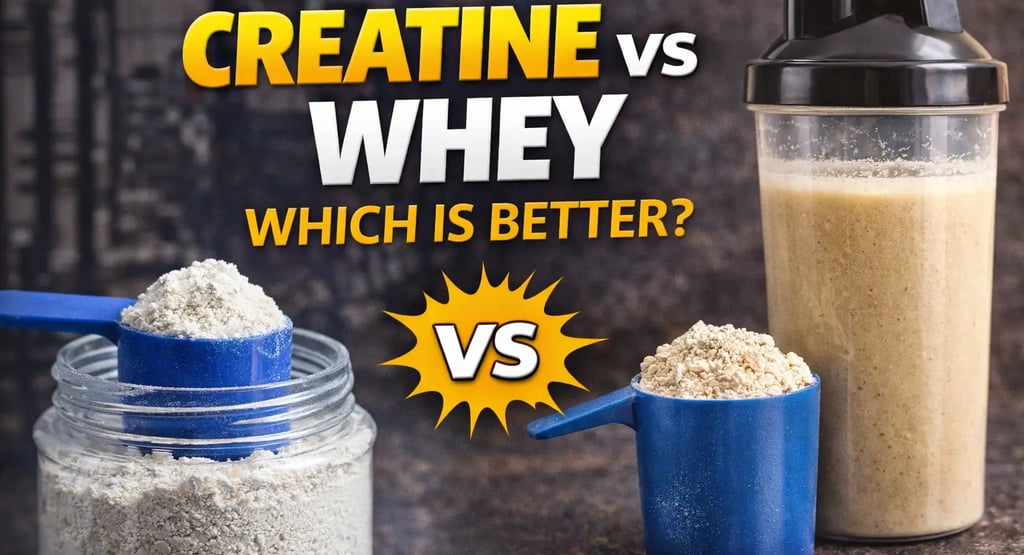
Creatine vs Whey: Which Is Better for Muscle Gain?
If you’re trying to build muscle, increase strength, or gain weight, you’ve probably asked this question:
Creatine vs Whey — which is better?
Both supplements are extremely popular in the fitness world. Both are backed by research. And both can help you build muscle — but they work in completely different ways.
In this detailed guide, we’ll break down:
What creatine is
What whey protein is
How each works
Which is better for muscle gain
Whether you should take both
Let’s settle the debate once and for all.
What Is Whey Protein?
Whey protein is a fast-digesting protein derived from milk during the cheese-making process. It contains all nine essential amino acids, making it a complete protein.
The main reason people take whey protein is simple:
👉 To meet their daily protein intake for muscle growth.
Why Protein Matters for Muscle Gain
Muscle is built from amino acids. When you lift weights, you create tiny tears in muscle fibers. Protein repairs and rebuilds those fibers, making them bigger and stronger.
If you don’t consume enough protein, muscle growth slows down — no matter how hard you train.
Benefits of Whey Protein
✔ Helps build lean muscle
✔ Speeds up recovery
✔ Convenient and quick to consume
✔ Supports weight gain when added to calorie surplus
✔ Easy to digest (especially whey isolate)
How Much Whey Should You Take?
For muscle gain:
1.6–2.2 grams of protein per kg of bodyweight per day
1–2 scoops of whey daily depending on diet
Whey is not magic — it simply helps you hit your protein target.
What Is Creatine?
Creatine is a natural compound found in muscle cells. It helps your body produce ATP (adenosine triphosphate), which is your primary energy source during short, intense activities like lifting weights.
Unlike whey, creatine is not protein. It doesn’t directly build muscle. Instead, it improves performance — which leads to better muscle growth over time.
Benefits of Creatine
✔ Increases strength
✔ Improves power output
✔ Enhances muscle endurance
✔ Makes muscles look fuller
✔ Proven safe and well-researched
Creatine allows you to:
Lift heavier weights
Perform more reps
Recover faster between sets
That extra performance stimulates greater muscle growth.
Which Is Better for Muscle Gain?
The real answer?
👉 They do different jobs.
If you’re not eating enough protein, whey is more important.
If you already hit your protein goal, adding creatine can increase strength and speed up progress.
For skinny guys trying to gain weight:
First priority = Eat in calorie surplus
Second priority = Hit protein target
Third priority = Add creatine for performance
When Whey Is Better
Whey protein is better if:
You struggle to eat enough protein
You’re underweight
You need quick post-workout nutrition
You want convenient calories
For muscle growth, protein intake is non-negotiable.
Without sufficient protein, creatine won’t help much.
When Creatine Is Better
Creatine is better if:
You already consume enough protein
You want to increase strength
You want faster muscle fullness
You want better gym performance
Creatine works especially well for:
Heavy compound lifts (squats, deadlifts, bench press)
High-intensity training
Progressive overload
Example Stack for Muscle Gain:
Post-workout shake:
1 scoop whey protein
5g creatine monohydrate
Banana
Peanut butter
Whole milk
This creates a powerful muscle-building combination:
Protein for repair
Creatine for strength
Carbs for recovery
Calories for weight gain
Does Creatine Cause Water Retention?
Yes — but inside the muscle.
Creatine increases water content in muscle cells, making them look fuller and stronger. This is not harmful bloating.
It actually improves muscle hydration and performance.
Does Whey Make You Fat?
No.
Whey protein does not cause fat gain. Excess calories cause fat gain.
If you use whey in a calorie surplus for muscle gain, you may gain some fat — but that’s due to total calories, not whey itself.
Best Form of Creatine
The most researched and effective form is:
👉 Creatine Monohydrate
3–5 grams daily
No need for loading phase
Take anytime (consistency matters more than timing)
Avoid expensive “advanced” creatine blends. Basic monohydrate works best.
Best Type of Whey Protein
There are three main types:
Whey Concentrate – Affordable, slightly more lactose
Whey Isolate – Higher protein, lower lactose
Whey Hydrolysate – Pre-digested, expensive
For most people, whey concentrate or isolate is perfect.
Who Should Choose Whey?
✔ Skinny guys trying to gain weight
✔ People struggling to eat enough protein
✔ Beginners starting muscle-building journey
✔ Anyone in calorie surplus
Who Should Choose Creatine?
✔ Intermediate lifters
✔ Strength-focused athletes
✔ Those wanting more power
✔ People who already meet protein goals
Final Verdict: Creatine vs Whey — Which Is Better?
If you force a choice:
For beginners: Whey is more important.
For strength gains: Creatine gives faster performance boost.
For maximum muscle growth: Use both together.
The truth is — they are not competitors.
They are teammates.
Simple Muscle Gain Formula
If you want real results:
Train hard (Push Pull Legs or similar split)
Eat in calorie surplus
Consume 1.6–2.2g protein per kg
Take 3–5g creatine daily
Sleep 7–9 hours
Follow this for 12 weeks and you will see noticeable progress.